


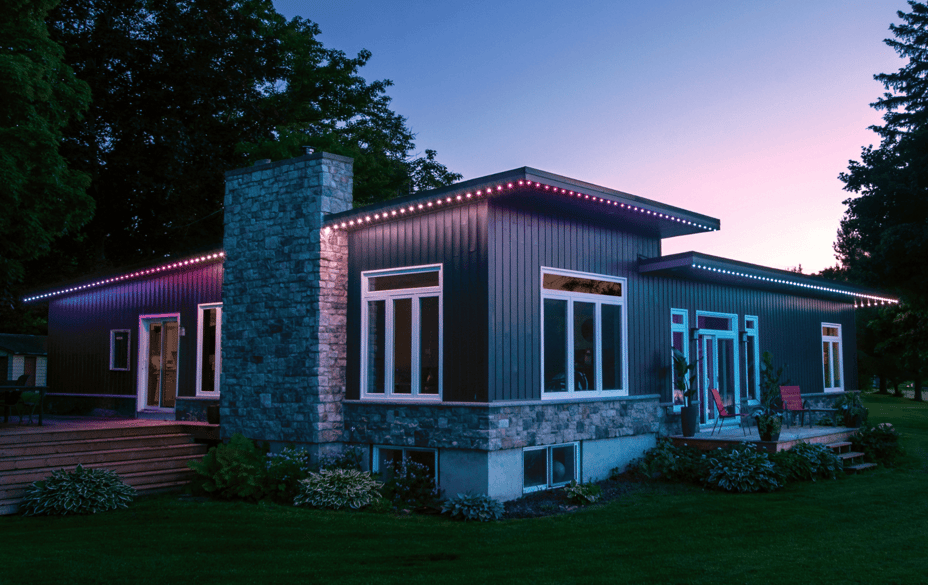
7 Permanent Outdoor Lighting Design Mistakes to Avoid
Permanent outdoor lighting, frequently referred to as permanent holiday lighting, becomes part of a property’s architecture, enhancing the exterior, adding curb appeal, and shaping the atmosphere throughout the year. That makes thoughtful design just as important as the lighting system itself.
Whether the project involves a home, business, or public space, the right design can create an elevated, welcoming environment for everyday evenings, special celebrations, and the moments that matter. For property owners and professional installers alike, avoiding these seven common mistakes can lead to a cleaner installation and a better experience from the beginning.
1. Skipping the Layout Consultation
A permanent lighting layout involves more than measuring a roofline and calculating the number of lights required. Corners, peaks, transitions, architectural features, property boundaries, and wiring routes all influence the final design.
A professional consultation helps determine how architectural lighting can complement the property’s existing features. It allows the installer to plan fixture spacing, transitions, and track placement so the finished system feels intentional while remaining discreet against the home exterior during the day.
For Celebright™ Dealers, this stage also creates clearer expectations around the project scope, pricing, and installation requirements. For customers, it provides a better understanding of how the completed system will look and function.
2. Treating the Entire Property as One Zone
Different areas of a property often serve different purposes. The front may call for subtle architectural lighting that enhances curb appeal, while a patio, entrance, landscape feature, or storefront may benefit from a warmer or more expressive look.
Without thoughtful zone planning, the full system may have to operate as one unit. This limits the ability to use different colours, brightness levels, or scenes to shape the atmosphere across separate areas.
Celebright supports up to 10 independent Zones on a single system. Planning these zones from the beginning creates greater flexibility for everyday ambience, outdoor gatherings, business events, holidays, and future needs.
3. Choosing Components Based on Price Alone
Permanent outdoor lighting is exposed to sunlight, rain, snow, wind, and changing temperatures throughout the year. Materials that are not designed for these conditions may fade, crack, corrode, or allow moisture into the system.
Price matters, but it should be considered alongside material quality, weather resistance, safety certifications, warranty coverage, and access to replacement components.
The Celebright system uses aluminum track, UV-rated bulb covers, and waterproof connections designed for year-round outdoor use. Its bulbs are rated for 50,000 hours, and the system is backed by a 10-year product warranty. Together, these components create an elevated finish designed to complement the property rather than distract from it.
4. Overlooking Voltage Drop
Voltage drop occurs as power travels through longer wiring runs. If it is not properly accounted for, lights farther from the power source may appear dimmer or less consistent.
Professional installers consider run lengths, electrical loads, wire sizing, and power placement before installation. Celebright’s efficient 24V low-voltage system is designed to support consistent illumination while managing power effectively.
This planning may not be visible once the installation is complete, but it directly affects the system’s performance and the consistency of the atmosphere it creates.
5. Failing to Plan for Future Expansion
Lighting needs can evolve alongside a property. A customer may eventually add a deck, pergola, garden, storefront feature, or another section of roofline.
Planning for expansion does not mean every area needs to be completed at once. It may simply involve leaving accessible connection points, considering future zones, or choosing a platform that can accommodate additional lighting later.
New areas can be added to an existing Celebright system and managed through the same app, creating one connected experience without the need for separate controls.
6. Treating Smart Control as an Extra
Modern permanent outdoor lighting offers much more than basic on-and-off functionality. Scheduling, saved scenes, remote access, and smart-home integrations all influence how convenient and enjoyable the system is over time.
The Celebright app allows users to create custom scenes, manage their lighting remotely, and schedule displays by time or around sunrise and sunset. The Look Library also offers ready-to-use designs for everything from everyday evenings to Christmas lighting, Halloween lighting, and Diwali lighting, plus game days and special occasions.
Smart Home integrations with Google Home, Amazon Alexa, and IFTTT provide additional ways to connect lighting with existing routines and devices. For Dealers, demonstrating these features during the final handoff is an important part of the installation experience. Customers should finish the process feeling confident using and personalizing their system.
7. Designing for Only One Occasion
Permanent outdoor lighting may be closely associated with the holidays, but its possibilities extend far beyond a single season.
A versatile design considers architectural lighting, outdoor entertaining, business events, community celebrations, game days, added visibility, and everyday evenings. Individually controllable bulbs and independent zones make it easy to move between subtle, welcoming light and more colourful, expressive displays.
Thinking beyond one occasion also helps Dealers recommend a system based on how the property will be experienced throughout the year—not only during the busiest lighting season.
What to Look for in a Permanent Lighting Installer
A qualified installer should understand layout planning, electrical requirements, track placement, system controls, and long-term support. They should also be able to clearly explain why a particular design is being recommended and how it will complement the property’s architecture.
Before moving forward, ask about:
-
Training and permanent lighting installation experience
-
Product and workmanship warranties
- Access to technical support and replacement components
- Weather ratings and safety certifications
- Plans for zones, wiring, and possible expansion
- System training provided after installation
Celebright Dealers complete structured training and receive ongoing quoting, installation, and technical support. These resources help Dealers approach each project with confidence while providing customers with knowledgeable local service. Ready to get started on thoughtfully designed permanent outdoor lighting?
Find a Dealer near you and get started!
Interested in offering Celebright through your business? Learn more about Becoming a Celebright Dealer.
Frequently asked questions
1. What is the most common permanent lighting design mistake?
Skipping the planning stage is one of the most common mistakes. A professional layout accounts for measurements, architecture, wiring, zones, and power requirements before installation begins.
2. What causes uneven brightness?
Voltage drop across longer wiring runs can cause inconsistent brightness. Proper calculations for wire sizing, run length, load, and power placement help prevent it.
3. How long should permanent lighting last?
System life depends on product quality, installation, climate, usage, and maintenance. Celebright bulbs are rated for 50,000 hours and are supported by a 10-year product warranty.
4. Is permanent lighting only for homes or holidays?
No. Permanent lighting can be used on homes, businesses, community spaces, and other properties for architectural lighting, events, holidays, everyday ambience, added visibility, and more.
Leave a Reply